OVERVIEW
—
CSBS is the nationwide organization of banking regulators from all 50 states and U.S. territories.
The Nationwide Multistate Licensing System (NMLS) is the system of record for financial services licensing or registration in 67 state and territorial agencies.
Small companies face unique challenges in navigating NMLS licensing compared to larger institutions. Without dedicated staff, they often rely heavily on the call center for support.
In 2023, the call center received 320,000 calls from MLOs struggling to complete their licenses, with an average cost of $9.70 per call. The scope of this project was to shed light on their overall experience (especially in relation to larger companies), identify specific problems and areas for improvement, and offer potential recommendations to enhance on-demand self-service support.
The NMLS Resource Center is the official gateway to the Nationwide Multistate Licensing System & Registry (NMLS) and provides users with resources, guidance, news, and updates.
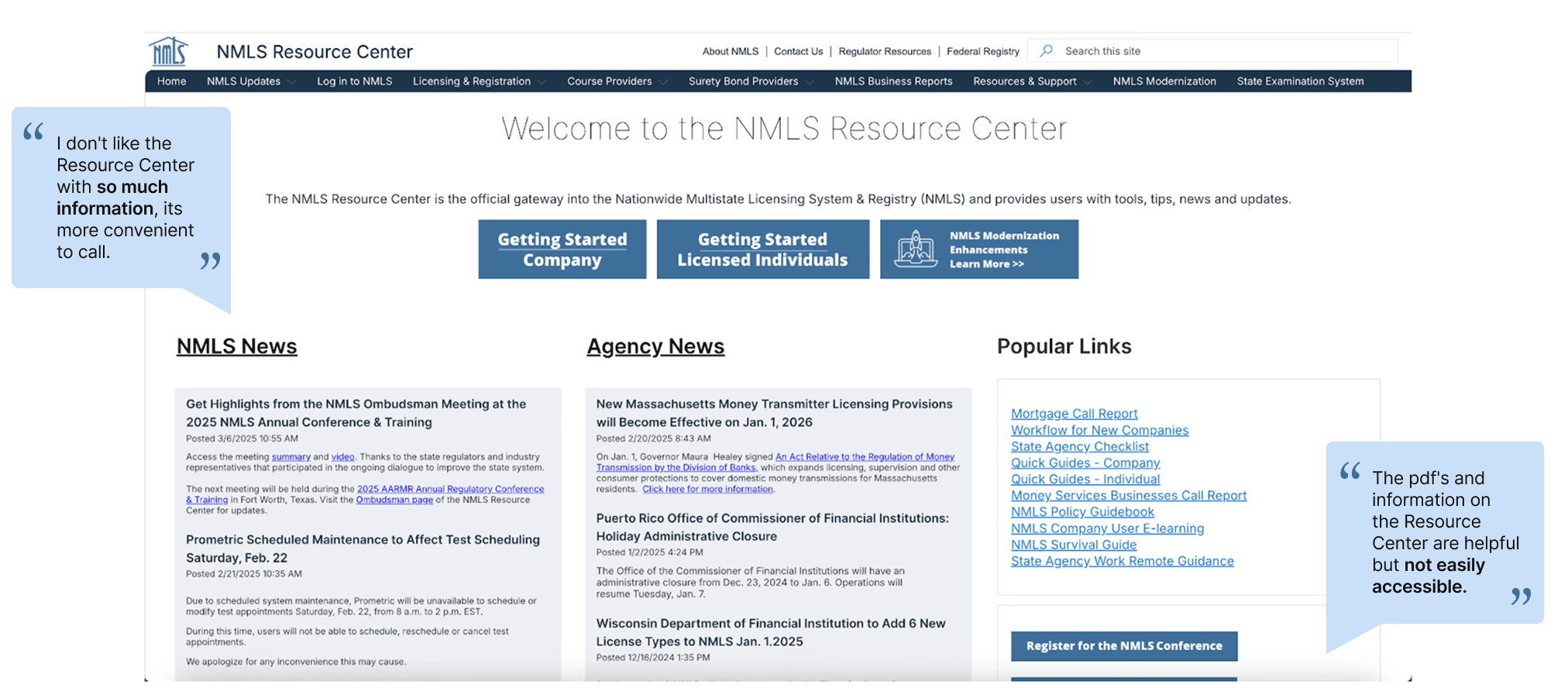
NMLS Resource Center (Before Redesign)
To keep the effort focused and impactful, we prioritized the redesign around six core NMLS workflows. The goal was to simplify navigation and reduce dependency on support calls. These high-priority workflows included:
👤 Account Creation
Initial setup process for registering a company on the NMLS platform.
📑 MU1 Filing
Primary form for companies to apply for licenses.
✍ MU2 Attestation
Form required for persons identified as a Control Person or Qualifying Individual (QI).
📊 Financial Statements
Electronically submit financial statements to satisfy state agency requirements.
💲 Form Payments
Submitting the required fees associated with NMLS filings and license applications.
⚙️ Account Management
Managing updates like amendments and Advance Change Notices (ACN).

Reduce call center reliance and costs
Identifying specific user pain points could improve the user experience for small companies and reduce reliance on the call center.

Understand small company user's experiences
Currently, small companies are underrepresented because most input comes from conferences dominated by large firms.
Improve self-service support for NMLS
Real data helped identify improvements for the new NMLS Resource Center, released in September 2025.
RESEARCH
—
Research Goals
GOAL 1
Map the journey
Document the end-to-end NMLS licensing journey of 6 core workflows for small-company users.
GOAL 2
Locate friction
Identify high error touchpoints, especially where users turn to the Resource Center or call support.
GOAL 3
Assess RC perception
Evaluate findability, completeness, and trust in the current Resource Center vs. users’ expectations.
Methods
6
call center interviews
3
end-user interviews
900
ServiceNow ticket analysis
Call Center Interviews
We created a journey map from self-evaluation to guide 6 interviews with call-center agents.
I began with a hypothesis journey map from a self-guided system review, then led six remote, semi-structured 1:1 interviews (60–90 minutes) with call center agents who understood the licensing process and its pitfalls inside out.
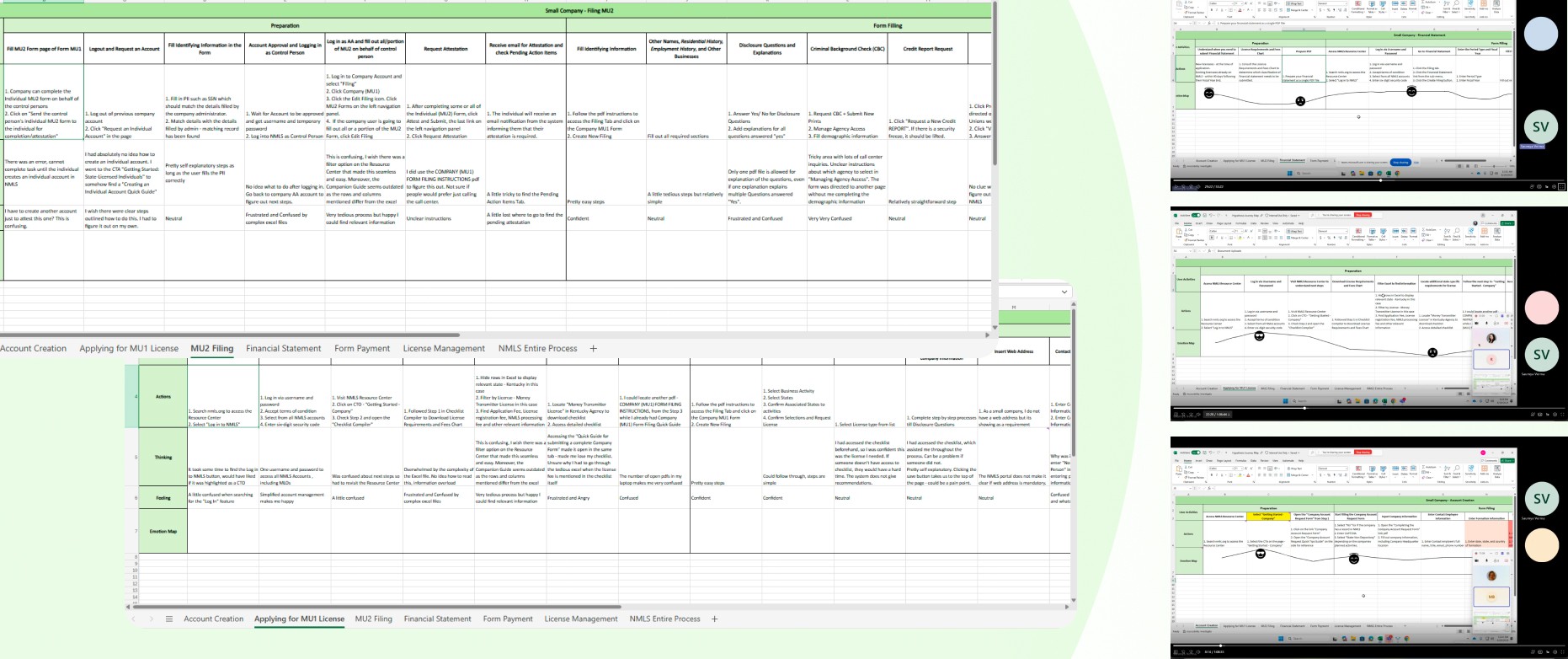
Led call-centre agent interviews using a custom Excel guide outlining key steps across six core workflows
User Interviews
Then, we led three remote, semi-structured 1:1 interviews (60–90 minutes) with end-users. This helped us directly empathize with the unique experiences of small company users.
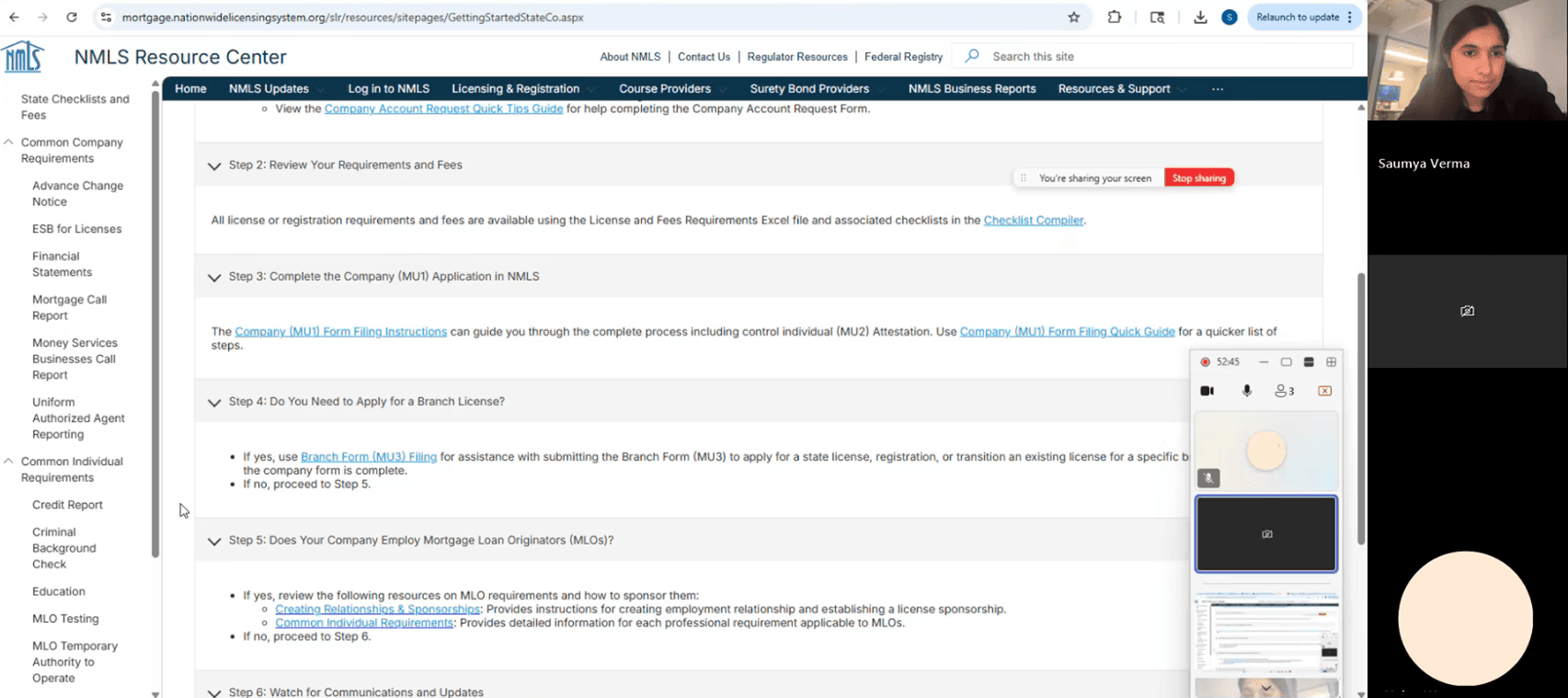
Interviewing end users to assess RC perception and understand user journey
ServiceNow Analytics
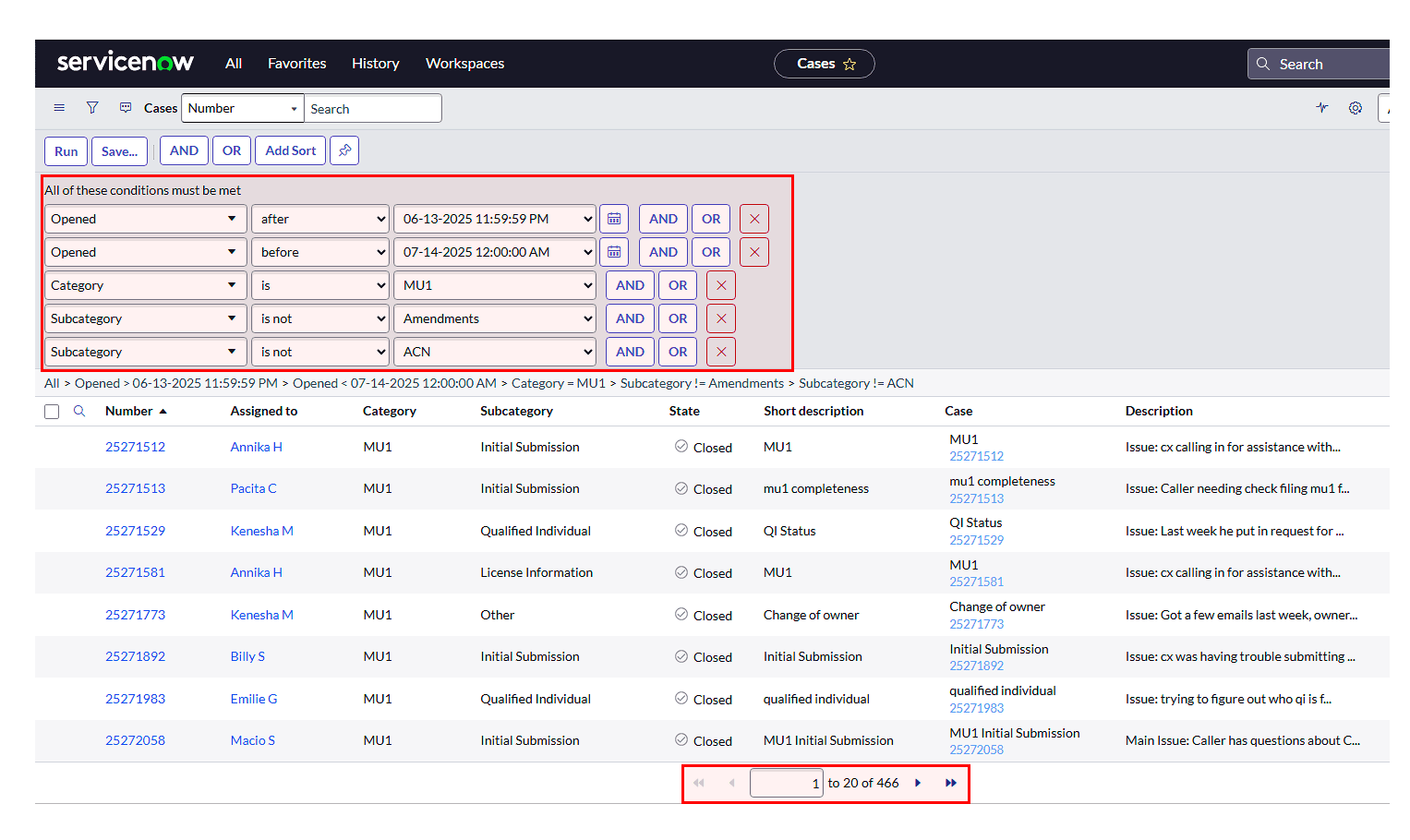
To quantify findings, I extracted ServiceNow call-center tickets, analyzing a random sample of 900 (150/workflow) to size pain points against themes.
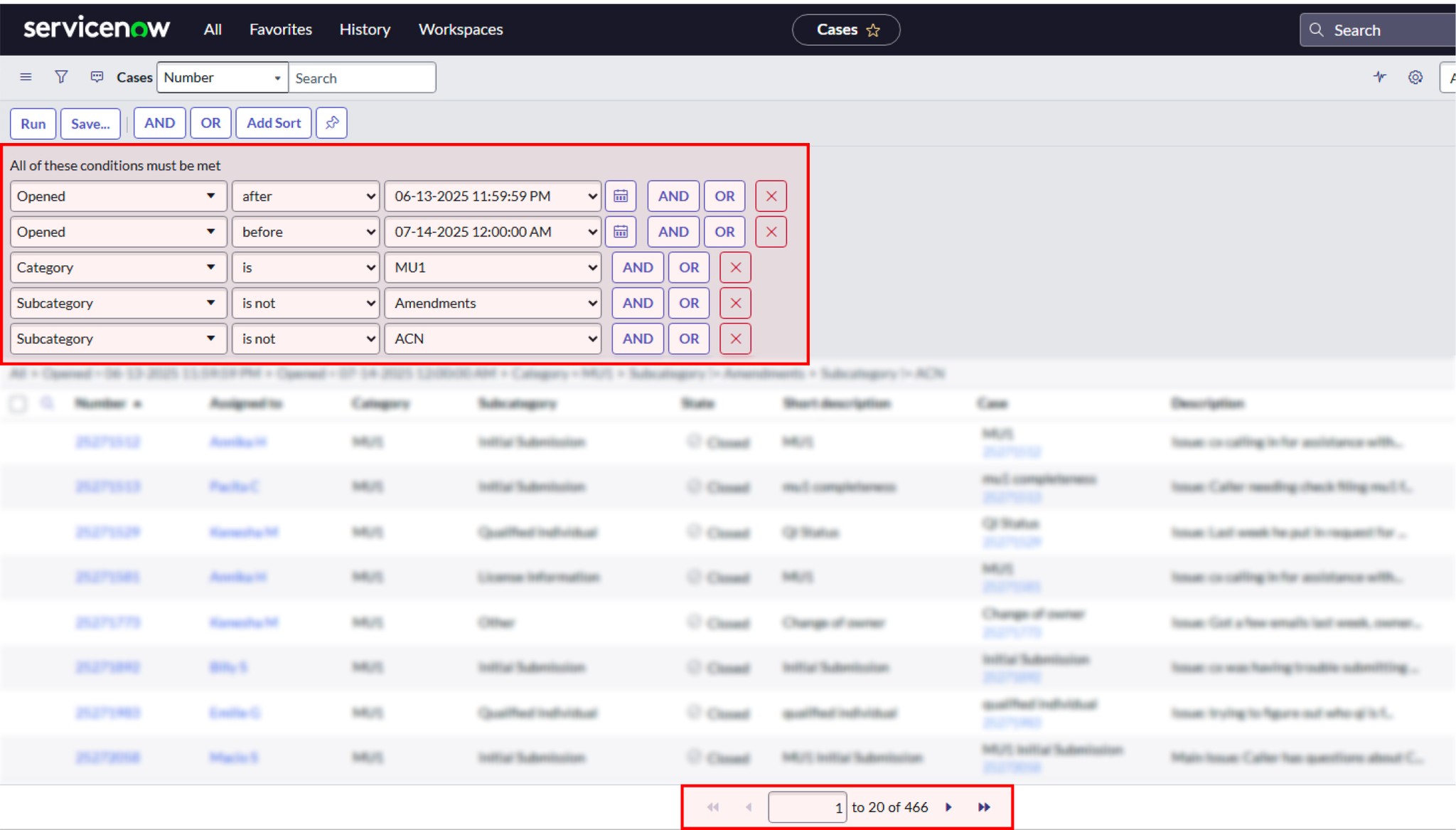
DEFINE
—
Affinity Mapping and Synthesis
Using Miro, I organized all research insights under six key workflow categories. From there, I extracted user pain points and identified over 25 issues that directly informed six journey maps.
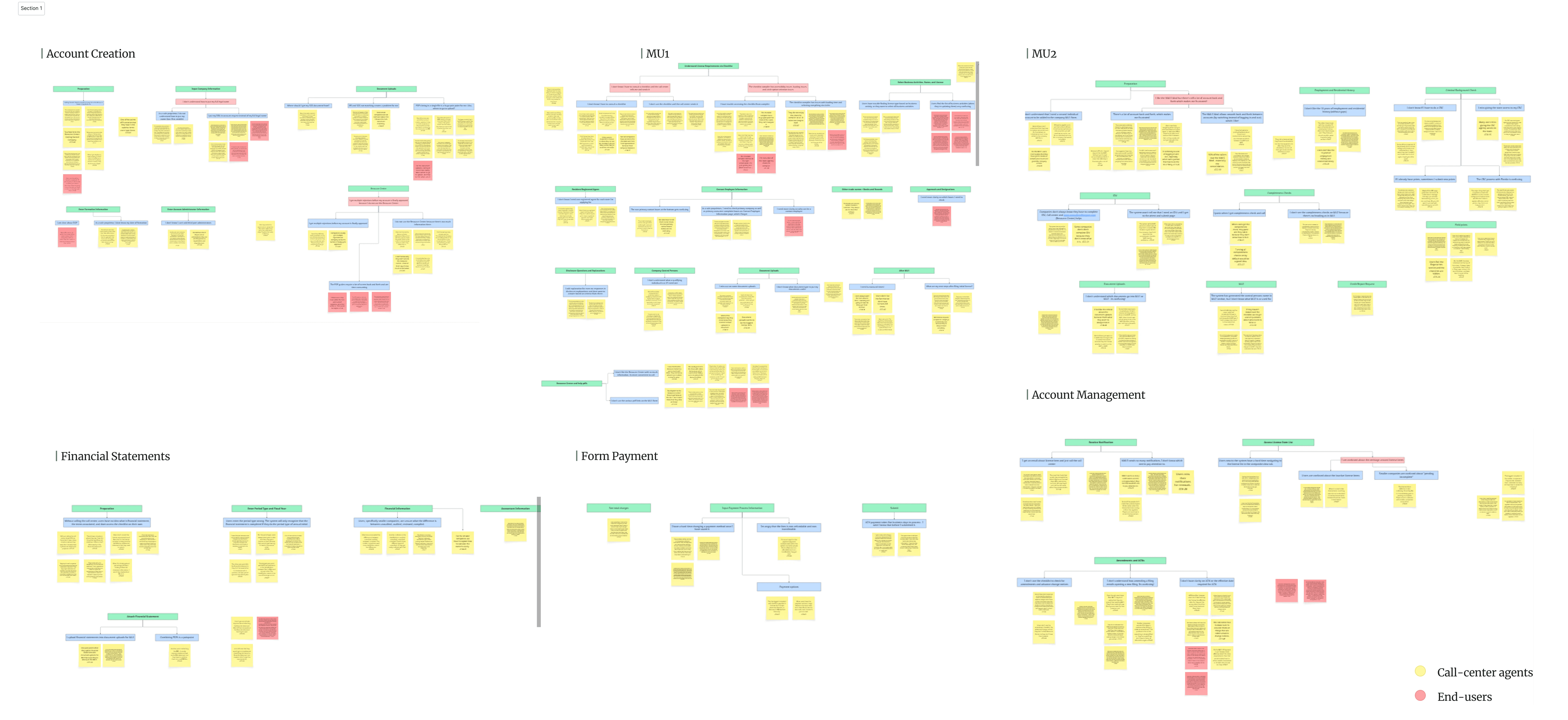
Affinity mapping to extract user behaviors and pain points
Key Insights
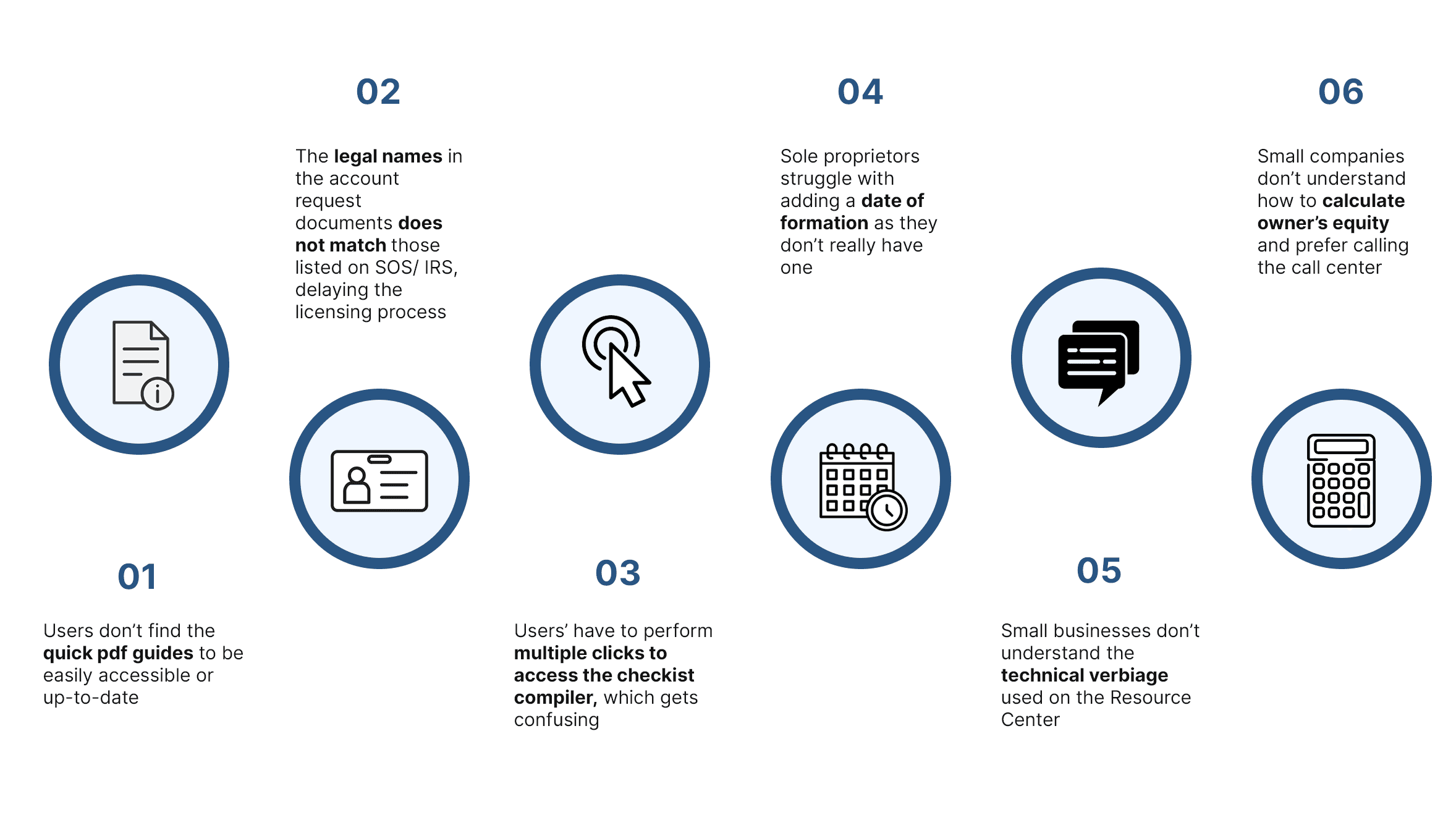
User Journey Maps
I synthesized research findings into six detailed journey maps, each structured around user actions, emotional journey, quantified pain points, and verbatim quotes. The color-coded data rows highlight issue severity, making it easy for stakeholders to identify where users struggle most.
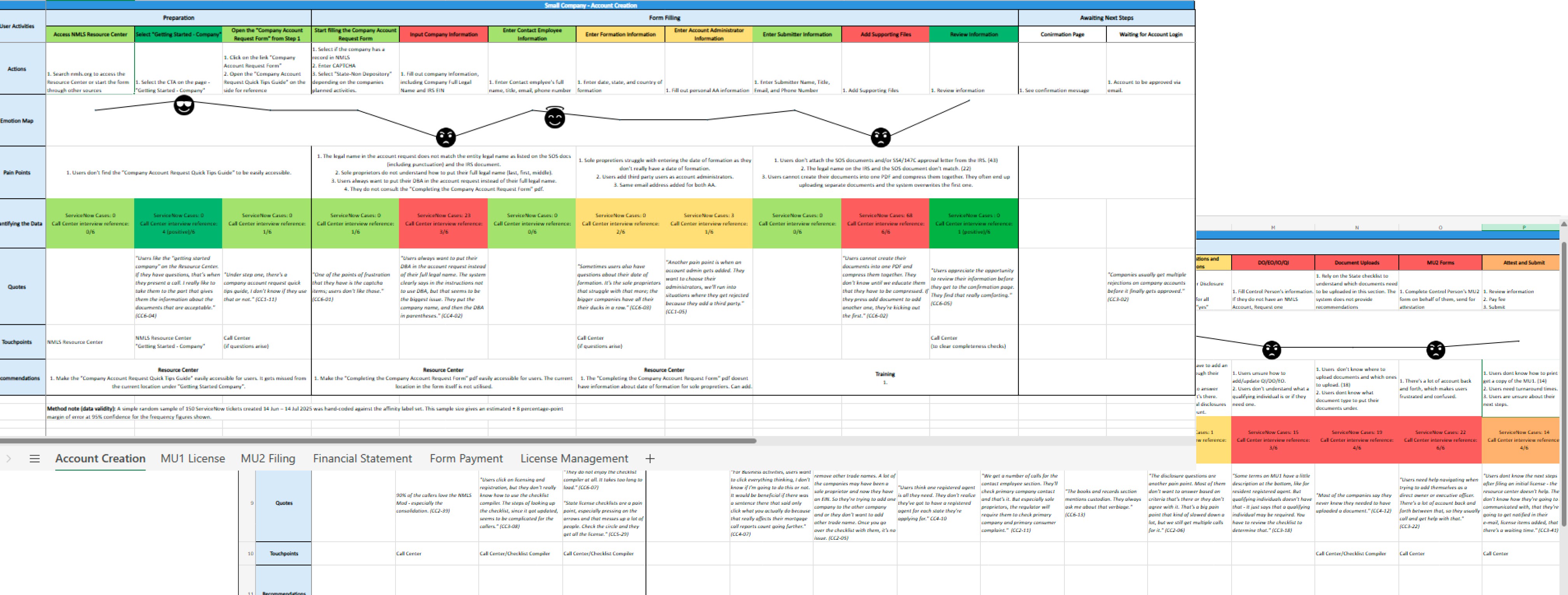

A snapshot of the six journey maps created
IDEATE
—
Design Goals

Reduce Visual Clutter
How might we create a clearer, more focused homepage that helps users find what they need?

Simplify Navigation
How might we help users locate licensing checklists and key resources faster?

Improve Search
How might we help users find specific information without feeling overwhelmed?

Clarify Language
How might we make NMLS terminology accessible to first-time small business users?

Keep Content Current
How might we ensure users always have access to accurate, up-to-date information?
PROTOTYPE
—
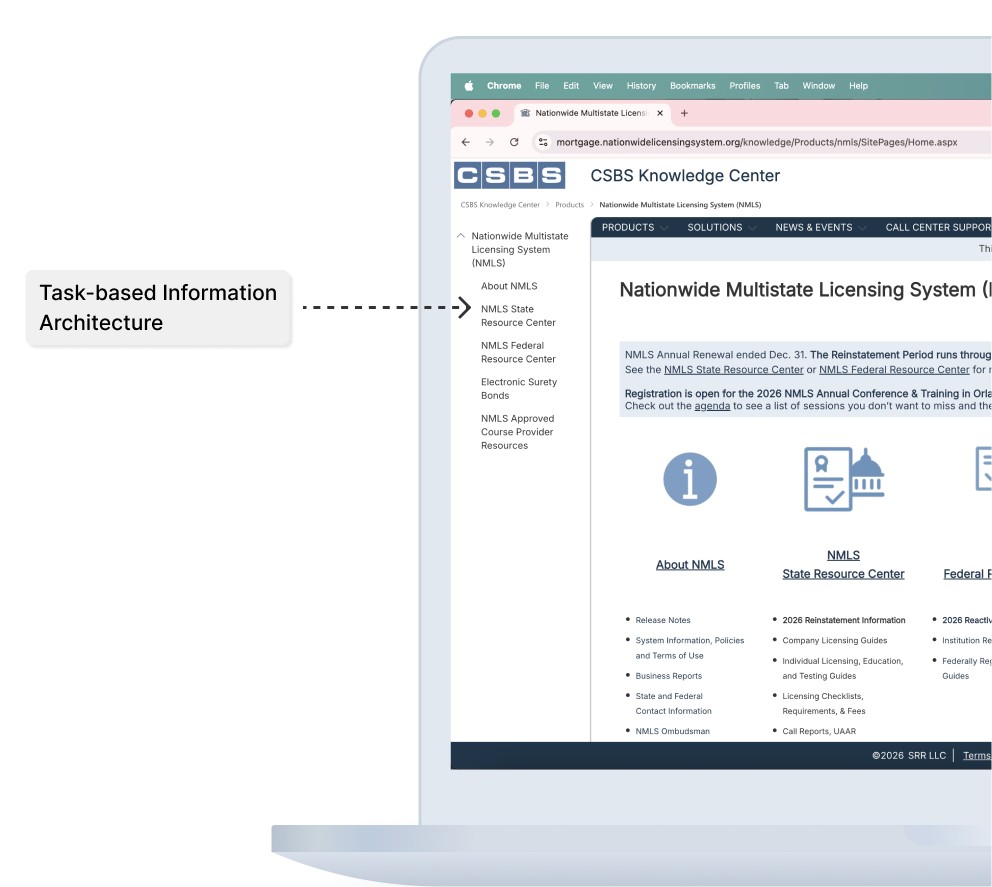
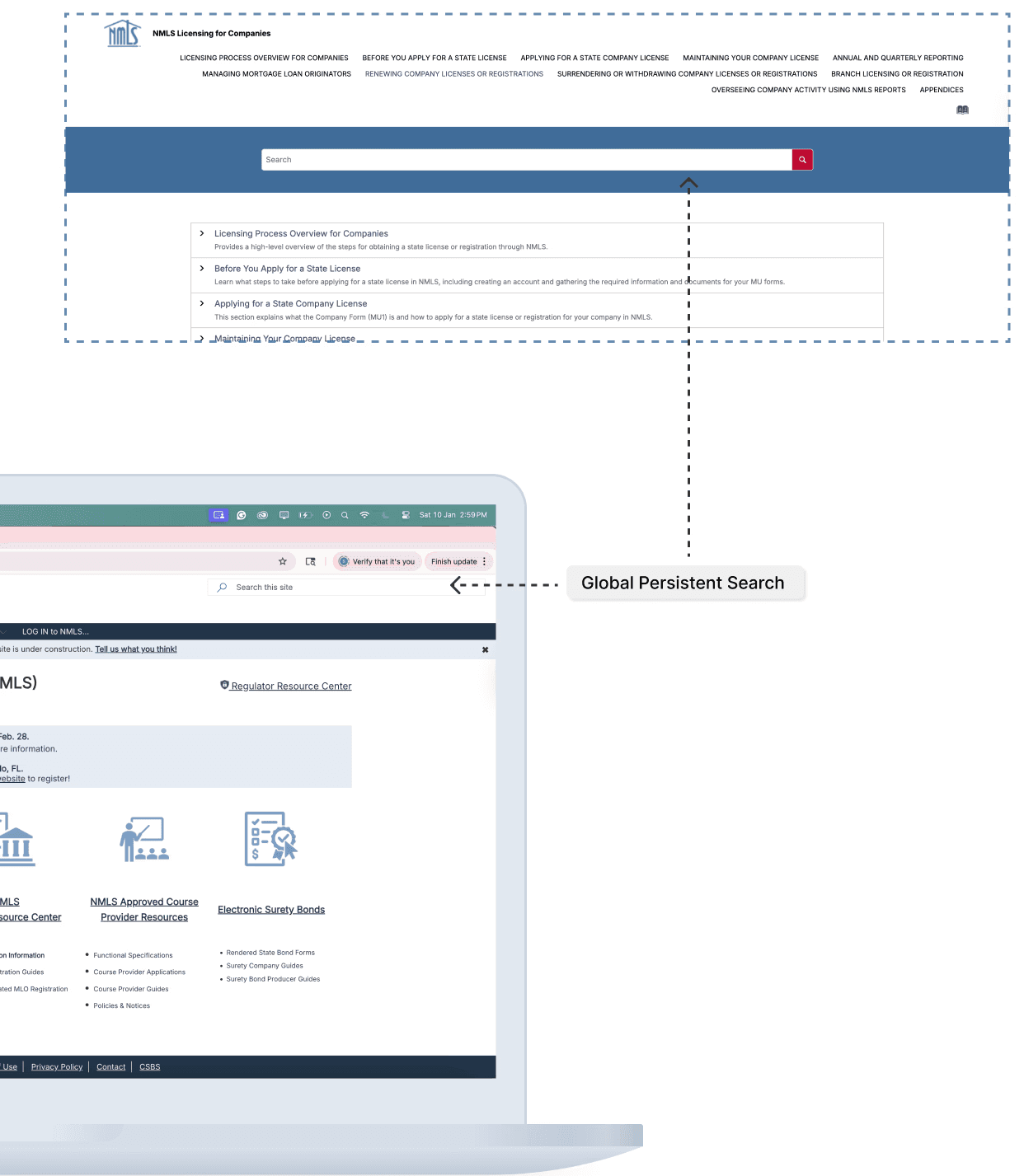
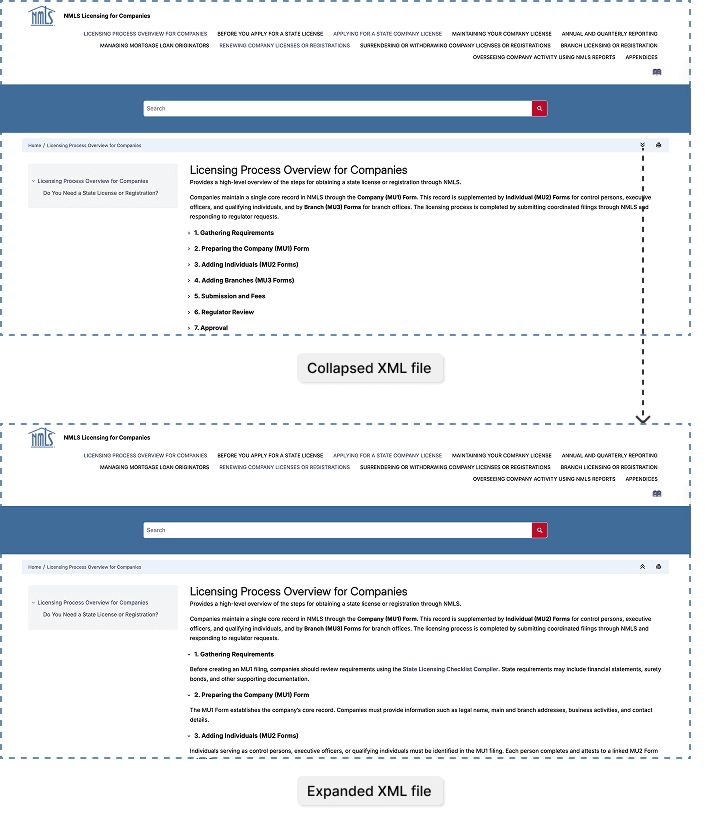
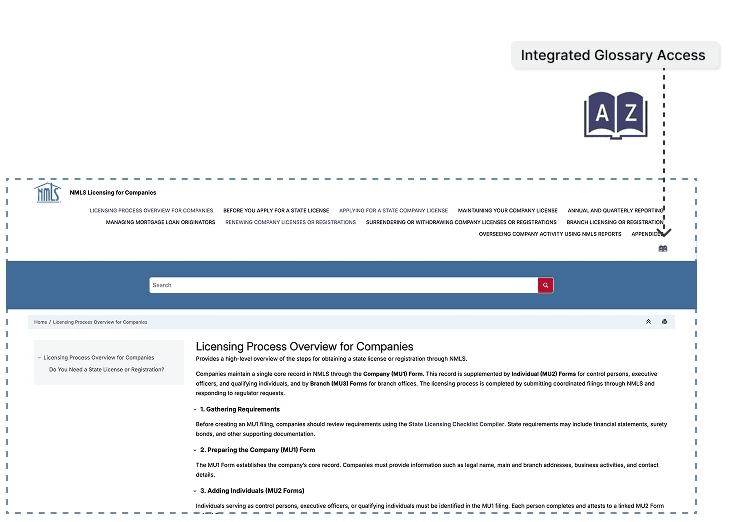
New NMLS Resource Center
The New NMLS Resource Center launched on September 20, 2025.
The redesigned NMLS Resource Center directly addresses key pain points from our research: confusing navigation, information overload, and content that previously catered only to large companies.
REFLECTION
—
Impact
Visibility
Synthesized and presented user research to VPs and Product Managers, bridging the gap between user insights and strategic product decisions.
Validation
Socialized the redesigned Resource Center with call center teams (the same users who informed our research) resulting in strong positive reception.
UX perception
Helped establish UX credibility within the business unit, showcasing how research-driven design leads to measurable product improvements.
Impact Stats
50%
reduction in navigation time across 10 common searches
~ 600 K
industry users impacted (state and federal Resource Center)
Reflection
I completed my internship in August 2025 and was extended through the Fall semester. Working at the intersection of financial regulation and UX has taught me more than I can easily summarize, but here are the key takeaways:
Empathy is key: Conducting user interviews revealed just how much is at stake in this industry. Every piece of instructional text, every button placement carries weight that can cost people their livelihoods. Designing with user empathy has never felt more essential.
Data drives buy in, but stories create connection: Senior stakeholders need the numbers, user counts, error rates, conversion metrics. But user stories are what make those numbers resonate. Learning to weave both qualitative and quantitative methods into my journey maps has been one of the most rewarding parts of this work.
Pivot often: Real-world projects are rarely linear. We started with a vague goal of improving self-service for small company users, paused, and shifted to understanding their pain points. That detour uncovered insights that shaped key decisions and informed tree testing for the new NMLS Resource Center information architecture.
Small discoveries snowball: This research also helped us improve support for call center agents. A deep dive into ServiceNow call center data revealed untapped potential for UX improvements we hadn't anticipated.